"My son (13) and I did the knife making class and loved it. Knife handle upgrade really worth it too. We had a great time and our knives turned out so good. Highly recommend for anyone with an open morning."
Kyoto · Knife Forging · Under 3 Hours · One Train Ride from Osaka
Forge a Knife, Watch a Sakai Forge, or Train with a Samurai Sword
At a blacksmith's studio in northern Kyoto you change into work clothes, heat raw steel in the furnace, hammer it into a blade, then sharpen and polish it, and you leave with a 13 to 15 cm knife you made. Taught in English or Japanese; GetYourGuide lists it for ages 15 and up.
From
$152
per person
Free cancellation
- 4.9 / 5 1032+ Reviews
- 13 Experience Types All Osaka Experiences
- Free Cancellation
The Experience
What the Kyoto Knife Forging Class Includes
Under three hours, says the operator, from a lump of steel to a knife you can cook with.
Highlights
- Forge a knife from a piece of raw steel, not just sharpen a finished one
- Heat the steel red-hot and strike it yourself, with the instructors beside you
- Sharpen and polish your 13 to 15 cm blade on stones and grinders
- Work clothes, tools, materials, a box and a bag included
- Two studios in Sakyo-ku, northern Kyoto; the team tells you which before your visit
What's Included
- Costume
- Towel
- Water
- Tools
- Materials
- Box
- Bag
How the Forging Class Works
One train ride from Osaka to a blacksmith's studio in northern Kyoto.
Book and Cancel Free up to 24 Hours
Cancel free up to 24 hours ahead. Before the day, the team messages you to say which of its two Sakyo-ku studios to go to.
Change and Learn the Tools
Put on blacksmith's work clothes, then learn the hammers, tongs and grinders and the safety rules before anything gets hot.
Forge the Blade
The steel goes into the furnace until it glows red, then you strike it again and again into shape, guided by the instructors.
Sharpen, Polish, Take It Home
Bring the edge up on sharpening stones and grinders, polish the blade, and leave with your knife in its box and bag.
Photo Gallery
Fire, Hammer and Stone
The furnace, the anvil and the sharpening stones, and the knife you take home.


Book Your Experience
Check Availability & Prices
Select your preferred date and time. Cancel up to 24 hours in advance for a full refund.
Forge It, Watch It, or Finish It: Three Knife Experiences from Osaka
Hammer your own blade at a Kyoto blacksmith, see a Sakai forge on a Wednesday, or finish a knife in Gion. Prices as of October 2026.
| Feature | YOU HOLD THE HAMMER Forge It: Blacksmith Class (Kyoto) | Watch It: Sakai Knife Maker or Blacksmith Walk | Finish It: Knife Craft and Sharpening (Gion) |
|---|---|---|---|
| Starting Price | From $152/per person | From $46 | From $61 |
| Rating | 4.9/5 (1,032 reviews) | 4.8/5 (97 reviews) | 4.9/5 (376 reviews) |
| What you do | Heat raw steel in the furnace and hammer the blade yourself, then sharpen and polish it | Wednesdays only for the forge: a blacksmith's workshop. Tuesdays and Thursdays: the Yamawaki Hamono sharpening and finishing floor, with a sharpening lesson | Shape, assemble, sharpen and polish a kitchen knife, with no furnace |
| You take home | A 13 to 15 cm knife you forged, boxed | Only what you buy; a custom knife can be ordered | The kitchen knife you finished |
| Length | Under three hours, says the operator | Not given | Not given |
| Age | Listed as not for under-15s | No limit listed | Not given |
| Language | English or Japanese | English; French not guaranteed | English and Japanese staff |
| Getting there from Osaka | Sakyo-ku, northern Kyoto: well over an hour each way by Keihan and Eizan trains | Meet at Nankai Sakai Station, about 10 minutes from Namba | Gion, central Kyoto |
| Free Cancellation | Up to 24 hours ahead | Up to 24 hours ahead; needs 2 guests to run | Up to 24 hours ahead |
| Check Availability | View Sakai Tour | View Workshop |
Other Blade and Samurai Experiences from Osaka
The Sakai knife walk, a knife you finish without a furnace, a sharpening class, and three ways to handle a samurai sword.
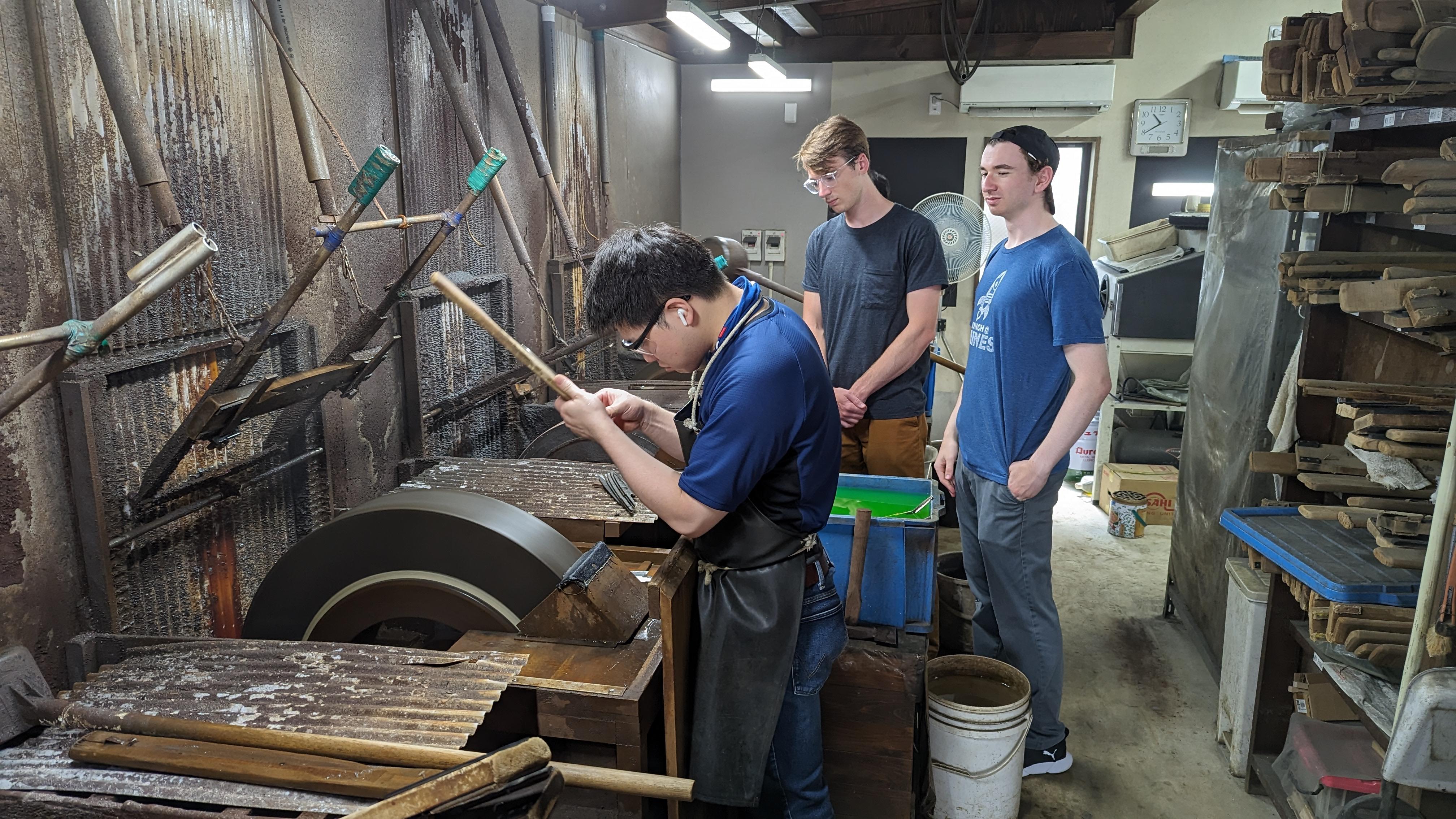 SEE THE FORGE: WEDNESDAYS
From Osaka: Sakai Knife Maker or Blacksmith Walking Tour
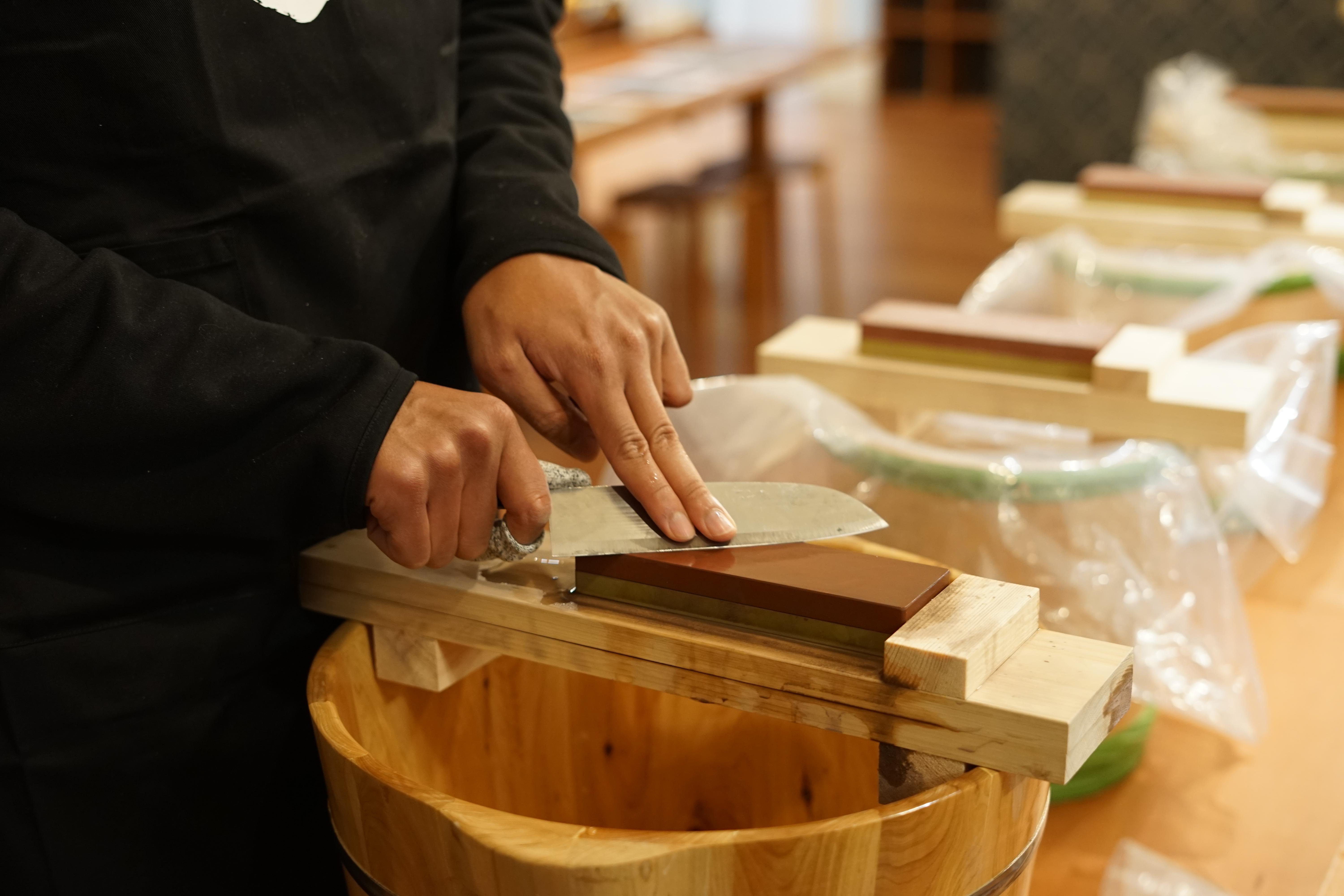 FINISH, NO FURNACE
Kyoto: Japanese Knife Craft & Sharpening Workshop in Gion
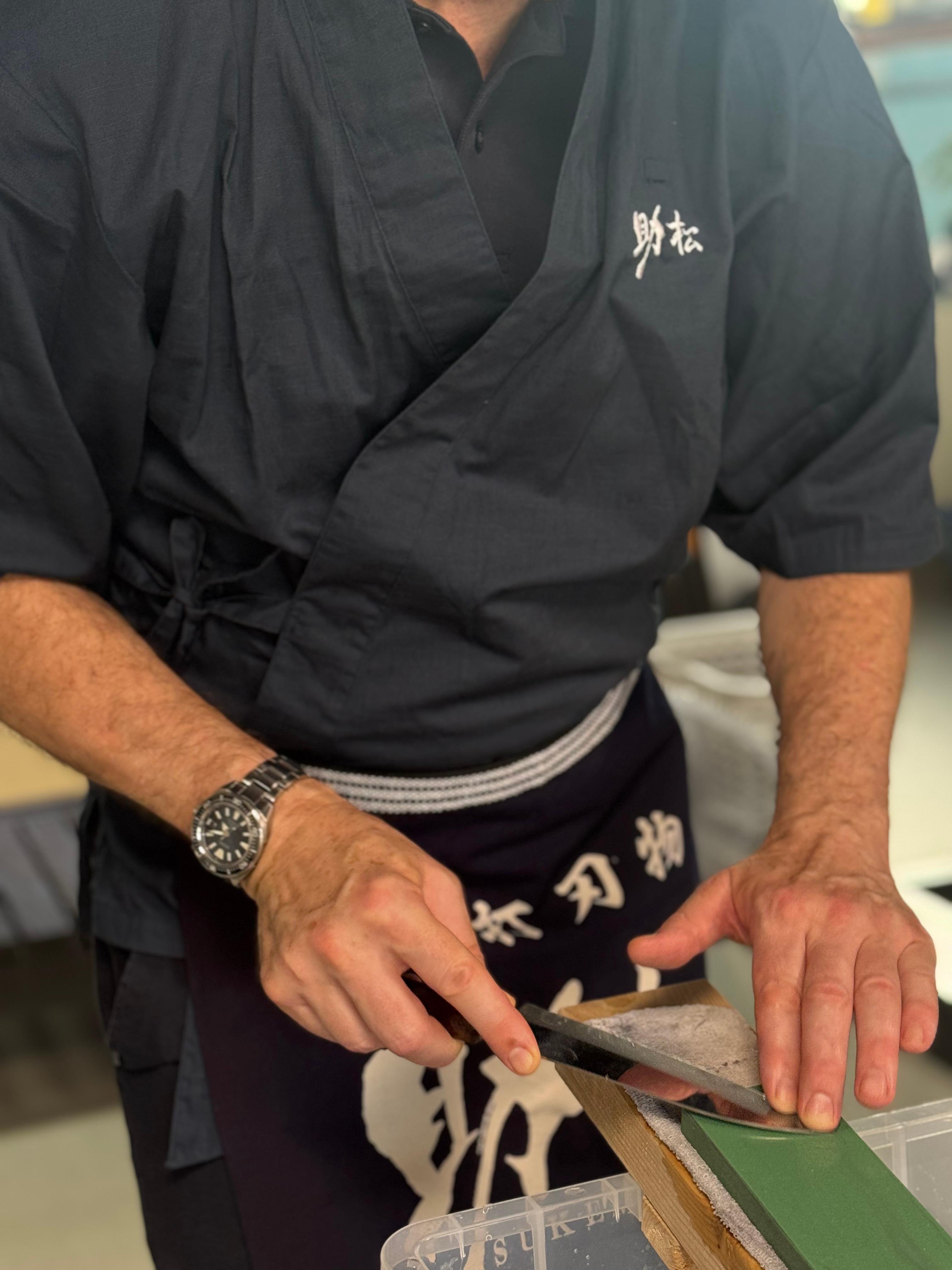 SAKAI SHARPENING
Sakai: Japanese Knife Sharpening Experience
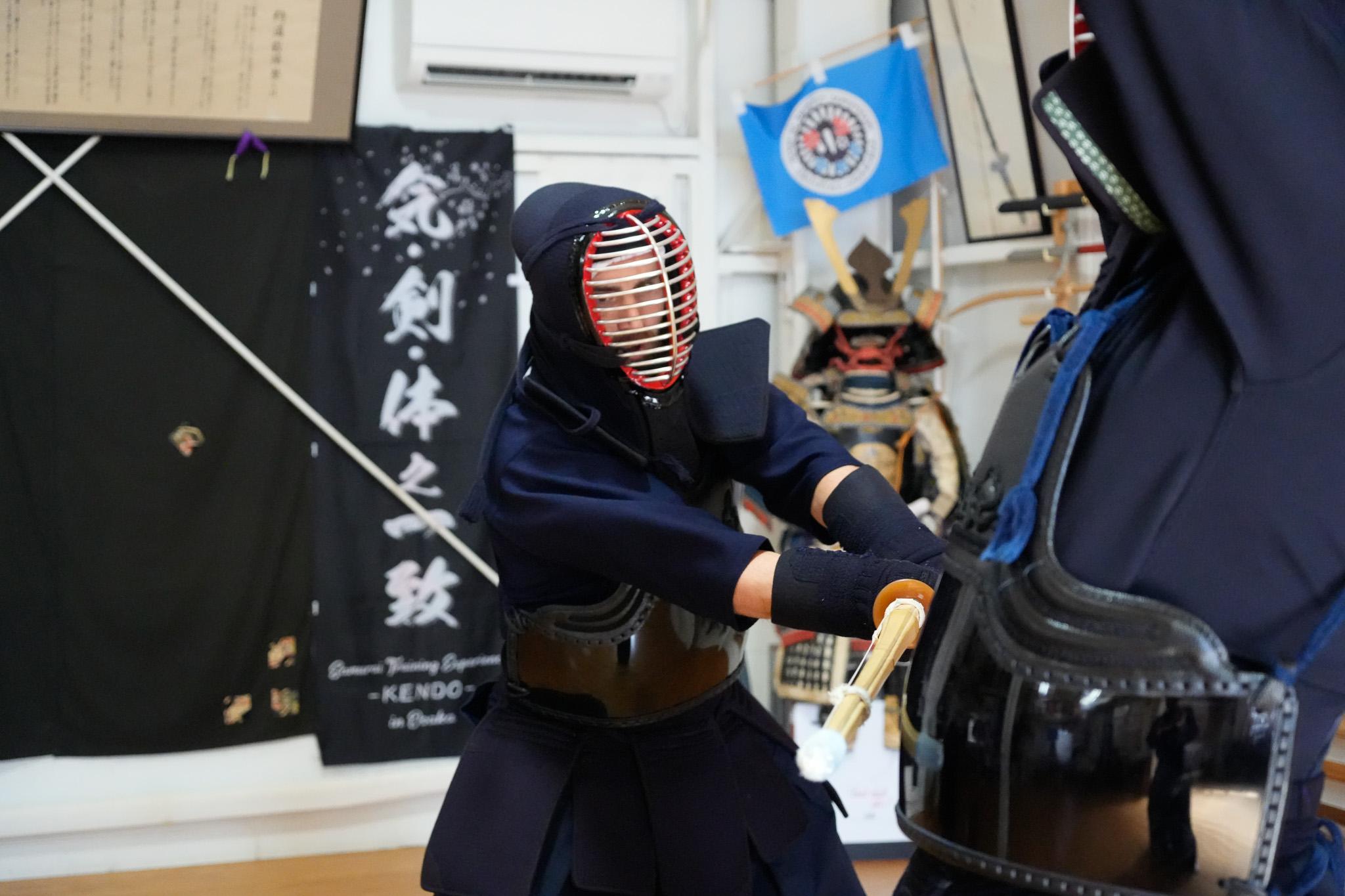 KENDO IN ARMOUR
Osaka: Samurai Training Experience KENDO in Osaka
 CUT WITH A REAL SWORD
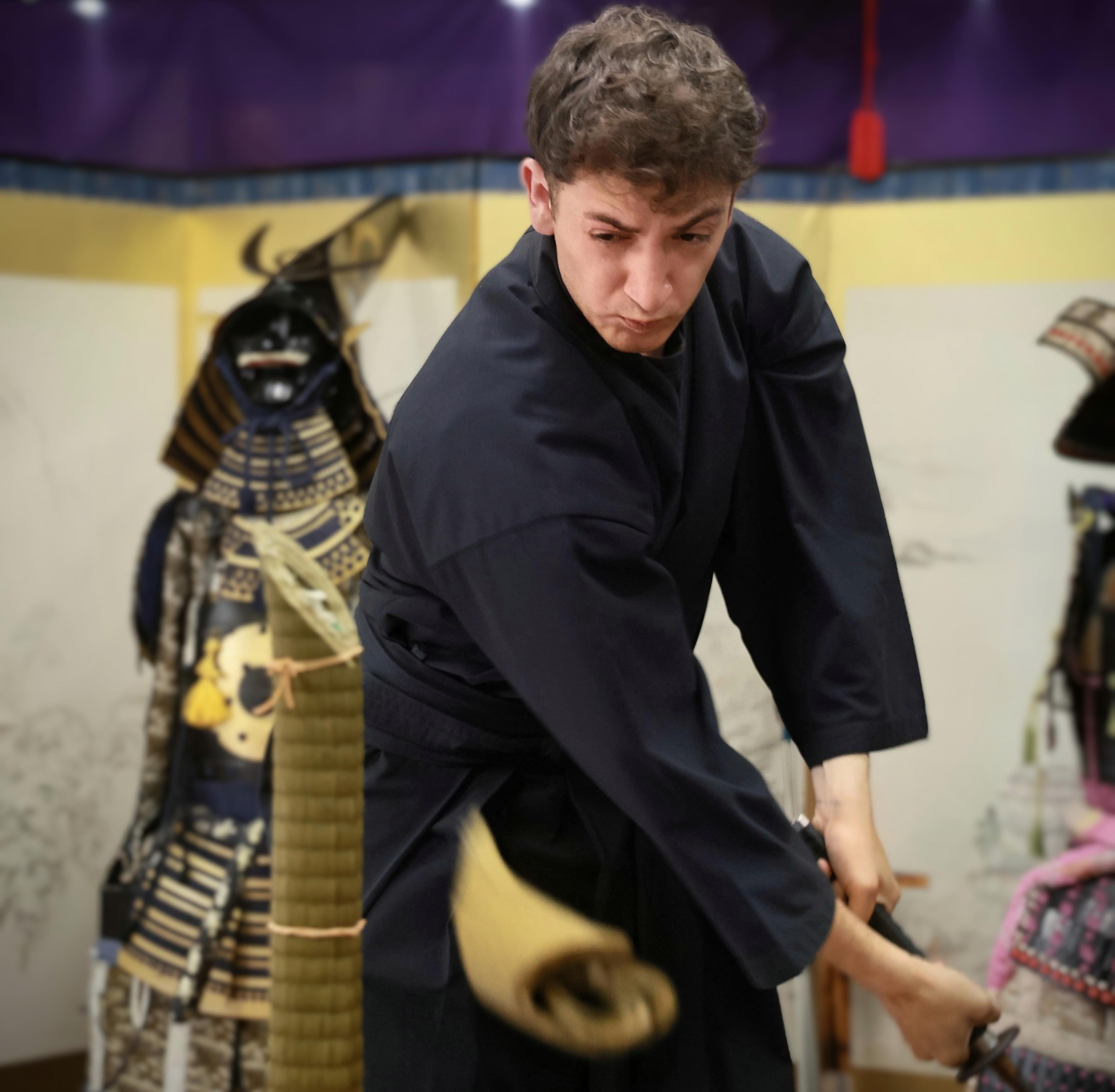
Osaka: Learn Bushido - Trial Slashing with Samurai Sword
 CAST A REPLICA SWORD
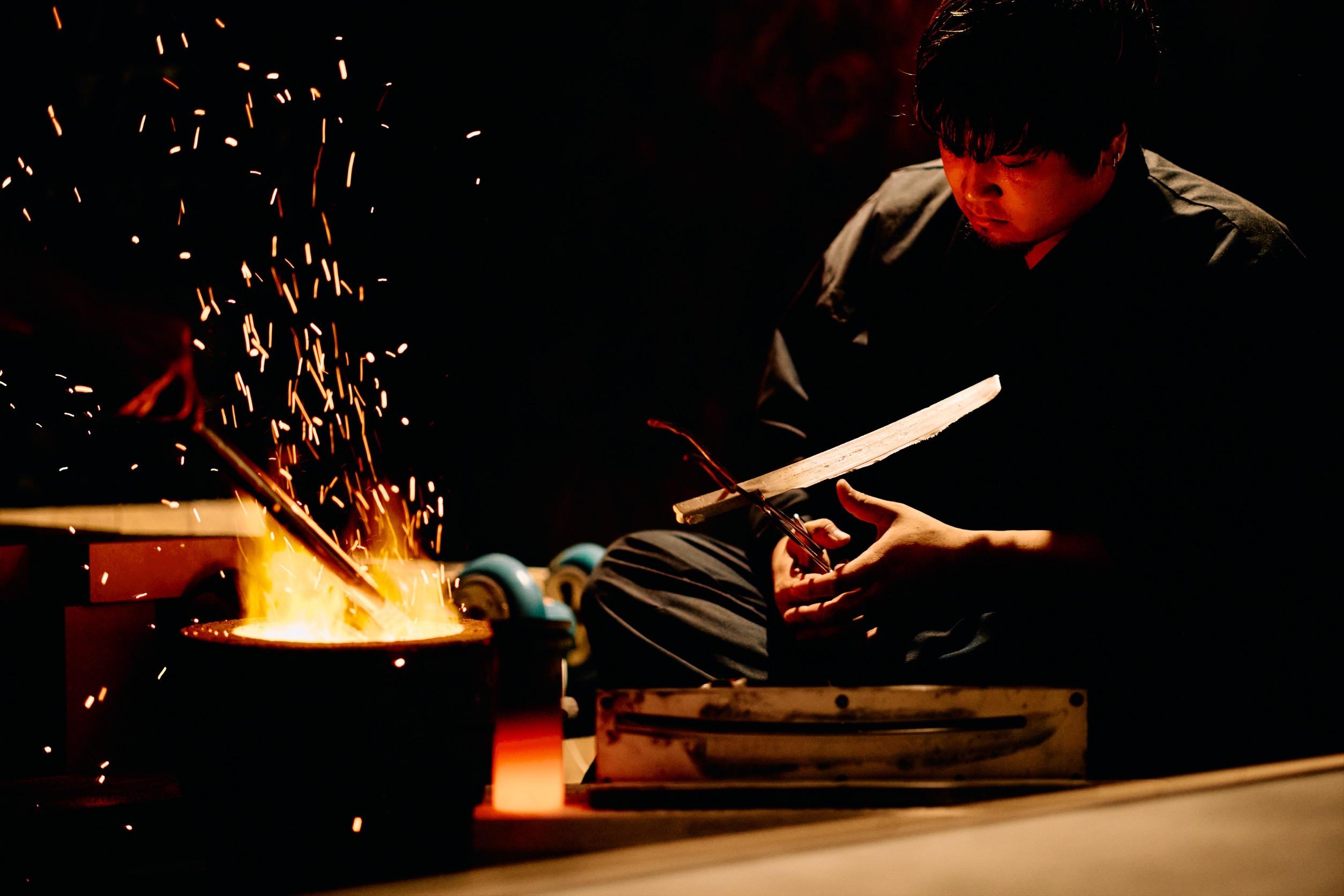
Kyoto: Custom-Made Japanese Samurai Replica Sword Workshop
A Guide to Blades and Samurai near Osaka
Forge It, Watch It, or Finish It
Where you can hammer your own blade, when Sakai's forge is open to visitors, what a good knife costs, how to fly it home, and what you can do with a samurai sword.
To forge a Japanese knife yourself from Osaka, book the Kyoto blacksmith class: you heat the steel, hammer the blade and sharpen it, and take home a 13 to 15 cm knife, from $152 as of October 2026, rated 4.9 from 1,032 reviews. Nothing in Osaka itself puts you at the anvil. Sakai, 10 minutes south of Namba, is where Japan’s professional knives are made, and its walking tour goes to a blacksmith’s forge only on Wednesdays; on Tuesdays and Thursdays it visits a knife maker’s sharpening and finishing floor. If you want the knife rather than the fire, a workshop in Gion has you finish one, from $61.
Forge it, watch it, or finish it
The knife experiences sold around Osaka look alike in their titles and are not. In one you hold the hammer. In another you watch the people who do. In the third you shape and sharpen a blade that someone else forged. Pick the one you came for:
Want to hammer it yourself
Kyoto Blacksmith Knife Forging
Raw steel into the furnace, your own hammer blows, then the sharpening stones. You keep the knife.
Check dates →Want to see the fire
Sakai Knife Maker or Blacksmith Walk
Wednesdays go to a blacksmith's workshop; Tuesdays and Thursdays to Yamawaki Hamono's sharpening floor.
See this tour →Want the knife, not the fire
Gion Knife Craft and Sharpening
Shape, assemble, sharpen and polish a kitchen knife in Gion, with no furnace and no age limit listed.
See this workshop →Prices, ratings and review counts as of October 2026; operators change prices, so treat them as the shape of the market, not a quote.
The Kyoto forge suits anyone who wants the story as much as the knife. One reviewer found it too short to do the sharpening stage justice; another came with a 13-year-old son. GetYourGuide lists it as not suitable for children under 15, while the operator’s notes say under-15s must come with an adult, so check before booking for a teenager.
The Sakai walk suits cooks who want to meet the trade and buy well. It starts with a sweet from an old-fashioned sweet shop, goes through the city’s crafts museum, then into a workshop, and includes shopping time and the option to order a custom knife. It needs two guests to run, so a solo booking can be cancelled.
The Gion workshop suits a short slot in a Kyoto day: you work on a blade already made, so there is no furnace.
What it costs to come home with a knife
| Route | What you pay | What you leave with |
|---|---|---|
| Gion knife craft workshop | From $61 | A kitchen knife you finished; blade and handle upgrades cost extra |
| Sakai walk, then a knife from a Sakai shop | From $46, plus the knife | Whatever you buy: a 210 mm Sakai Takayuki gyuto lists from about $180 at overseas shops, white-steel versions at $280 to $460 |
| Kyoto blacksmith class | From $152 | A 13 to 15 cm knife you forged yourself |
| Seki Damascus workshop | From $316 | A Damascus knife with your own drawing on the blade, on a long day trip |
Class prices from GetYourGuide, knife prices from overseas retailers’ listings, all as of October 2026. Shops in Sakai price in yen, and visitors can reclaim the 10% consumption tax.
What makes a Sakai knife good
Division of labour. A Sakai knife passes through several hands: the smith forges the blade, a sharpener puts the edge on it, and a handle maker fits it. The shogunate once stamped Sakai’s tobacco knives “Sakai Kiwame”, and since 1982 Sakai cutlery has been a national Traditional Craft.
One bevel or two. Traditional Japanese knives such as the yanagiba for sashimi, the deba for fish and the usuba for vegetables are sharpened on one side, which gives the thinnest cut but takes practice. The double-bevel gyuto and santoku are the easy first knives.
Hard steel, careful hands. Retailers put Japanese kitchen knives at roughly 60 to 63 HRC against 56 to 59 for German ones. The edge lasts longer, but it can chip if you twist the blade or cut bone. Carbon steels, the white and blue “paper” steels, take the keenest edge and rust if left wet; stainless is the easier choice for a home kitchen.
Is Sakai worth the trip?
Yes, for half a day, if you will buy a knife or want to see how they are made. Sakai Station is about 10 minutes from Nankai Namba. The Sakai Traditional Crafts Museum, about 10 minutes’ walk from the station or 3 minutes from Myokokuji-mae on the Hankai tram, is free, open 10:00 to 17:00, closed on the third Tuesday of the month, and has a knife museum and a shop. The city also holds the Daisen Kofun, part of the Mozu-Furuichi burial mounds listed by UNESCO in 2019, and the birthplace of Sen no Rikyu, the tea master covered on the Osaka tea ceremony page. sakaiknifeworkshop.com covers the Sakai workshops where you fit a handle and have your name engraved on a Sakai blade.
Samurai swords: lessons, not forging
No sword-forging class is sold for visitors anywhere near Osaka. Real swords are made by licensed swordsmiths, and the nearest place to watch one work is Seki, in Gifu prefecture, a long day away, where the swordsmith museum holds a forging demonstration about once a month and during its October cutlery festival. The forge on this page makes a kitchen knife. What you can book with a sword is a lesson:
| Session (operator) | From | Rating (reviews) | What you do | Who can join |
|---|---|---|---|---|
| Kendo in an Osaka dojo (Vicky Co.) | $125 | 5.0 (195) | Full armour, bamboo shinai, match-style bouts | Ages 5 to 76 |
| Trial slashing with a real sword (Bushi no Homare) | $90 | 4.9 (91) | Dogi and hakama, sword stances, cutting a target | No under-10s |
| Replica sword workshop, Kyoto (Kendo Experience) | $190 | 5.0 (19) | Cast a 55 cm zinc-alloy blade and dress its scabbard and hilt | No limit listed |
Prices, ratings and review counts as of October 2026.
The kendo session is the most physical, with paired practice once you know the footwork, and an English-speaking instructor. The trial-slashing class in Shiginonishi, Joto-ku, is the one where a real blade meets a target; arrive 30 minutes early to change. For armour, iaido and private sword masters as well, osakasamuraiexperience.com compares Osaka’s samurai sessions one by one. For the history, Osaka Castle is where the Toyotomi made their last stand in 1615; see Osaka Castle tickets.
Getting your knife home
- Checked luggage only. Knives cannot go in cabin baggage on any airline. The TSA allows kitchen knives in checked bags if the blade is sheathed or securely wrapped; the UK takes them in the hold too, though it bans certain types such as flick and butterfly knives.
- In Japan, carrying a blade longer than 6 cm without a good reason is an offence. Taking a newly bought knife home counts, but keep it boxed and wrapped, and remember that railway rules ban unwrapped blades on trains.
- Tax-free shopping changes on 1 November 2026. You pay the full price and the 10% consumption tax is refunded after customs confirms the goods are leaving Japan. Do that check at the airport before you check in the bag with the knife in it.
- Real swords do not fly home with you. A genuine nihonto needs an export permit from the Agency for Cultural Affairs and is shipped as cargo by the dealer. Blunt alloy iaito and replicas are a different matter, but ask your airline before packing one.
Getting there
The Kyoto forge is in Sakyo-ku, northern Kyoto. From central Osaka, take the Keihan line to Demachiyanagi and change to the Eizan railway; allow well over an hour each way. It fits the morning of a Kyoto day: see the Kyoto day trip from Osaka for the afternoon.
The Sakai walk meets at Nankai Sakai Station, about 10 minutes from Namba on the Nankai Main Line. Sakai has several stations with similar names, so check you are on the Nankai line.
The sword sessions are in Osaka city: the trial slashing in Joto-ku, the kendo in a dojo the operator confirms when you book. To fit one into a day, see the Osaka itinerary.
Guest Reviews
What Recent Guests Say
4.9/5
from 1032 reviews
"Great day- I made a half decent knife with Shun’s assistance"
"An incredible experience. One of the most memorable experiences I’ve had and a treasure to keep for years to come."
"Great experience. Very interesting, but too short. I would have liked it to be a bit longer so that I could devote the right amount of time to the sharpening stage to make a knife that is 100% ready for use; as it is, it remains more of a collector's item. In any case, the staff were excellent, super helpful, and spoke excellent English. Highly recommended!"
"Great activity! Lots of fun even though my arm was shaking"
"one of the best experiences of the trip. and certainly the coolest souvenir to take hope."
"Amazing experience. Must try. Completely worth it. Staff is very helpful as well. Tip, don’t come there hungry as there are not many restaurants or shops around. Train station just in front of the place."
"Kato and Shun were excellent teachers! Their English was great and they were very knowledgeable on how to craft your knife! You get to actually forge, hammer, quench and sharpen your knife. They let you choose the shape/style of your knife and guide you through the process of making it. I loved this activity! I highly recommend it -Brian Farley, USA"
Read all 1032 verified reviews
See All ReviewsCheck Dates and Prices
Most tours on this site cancel free up to 24 hours ahead. A few tickets cannot be refunded, so read the terms before you pay. Starting from $152 per person.
Check AvailabilityFAQ: Knife Forging, Sakai Knives and Samurai Swords from Osaka
Where to forge a knife yourself, when the Sakai forge is open to visitors, what a good knife costs, how to fly it home, and what you can do with a samurai sword.
Yes, in Kyoto: nothing in Osaka itself puts you at the anvil. At the Kyoto blacksmith class you heat raw steel until it glows, hammer it into a blade with the instructors beside you, then sharpen and polish it, and you leave with a 13 to 15 cm knife. It takes under three hours, says the operator, costs from $152 as of October 2026 and is rated 4.9 from 1,032 reviews. The studios are in Sakyo-ku, northern Kyoto, well over an hour each way from central Osaka by Keihan and Eizan trains.
Yes, on a Wednesday. The Sakai knife maker or blacksmith walk visits a blacksmith's workshop on Wednesdays, where the smith explains forging in person. On Tuesdays and Thursdays it goes instead to Yamawaki Hamono, a knife maker of more than 100 years where blades arrive from the smith to be sharpened and finished, and you practise sharpening. It meets at Nankai Sakai Station, costs from $46 as of October 2026 and needs two guests to run.
Yes: Sakai, about 10 minutes south of Namba by Nankai train, is Japan's best-known home of professional kitchen knives. Its smiths made tobacco-cutting knives after the Portuguese brought tobacco in the 16th century, and the shogunate stamped them "Sakai Kiwame". When tobacco cutting went to machines, they turned to kitchen knives, and Sakai cutlery became a national Traditional Craft in 1982. The work is still split between the smith who forges, the sharpener and the handle maker, which is why the Wednesday and weekday versions of the Sakai walk show different workshops.
From roughly $100 to well over $1,000, depending on steel, shape and who made it. Overseas knife shops list a 210 mm Sakai Takayuki gyuto from about $180, white-steel versions at $280 to $460, and mirror-finished honyaki sashimi knives above $1,000, as of October 2026. In Sakai itself, the shop in the Sakai Traditional Crafts Museum sells everything from household knives to professional ones, and entry to the museum is free. If you would rather make one than buy one, the Kyoto forging class costs from $152 and you keep the knife.
Usually, for the same knife, because you skip shipping, import duty and a distributor's margin, and visitors can reclaim Japan's 10% consumption tax. From 1 November 2026 tax-free shopping works as a refund: you pay the full price in the shop and claim the tax back at the airport after a customs check, within 90 days of purchase, with a minimum spend of ¥5,000 per store per day. To learn what you are buying first, the Sakai sharpening class starts at the knife museum.
Ask what steel it is, who forged and sharpened it, and whether it is single- or double-bevel, then hold it. A good Sakai knife names its maker and steel: white or blue paper carbon steel takes a keener edge but rusts if left wet, while stainless is easier to live with. Check that the edge is even along its length and that the knife balances where your fingers pinch the blade. On the Sakai walk you can ask the people who make them.
Harder, not simply better. Knife retailers put Japanese kitchen knives at roughly 60 to 63 HRC and German ones at about 56 to 59, with thinner Japanese edges sharpened to around 15 degrees against about 20. The harder steel holds its edge longer but can chip if you twist it, cut bone or drop it, while softer German steel shrugs that off and needs sharpening more often. The Gion workshop teaches you to sharpen a Japanese edge yourself.
Traditional Japanese knives are single-bevel because one flat side makes the thinnest, cleanest cut. The yanagiba slices sashimi in one long stroke without sawing, the deba butchers fish, and the usuba peels vegetables into paper-thin sheets. They are harder to use and to sharpen than the double-bevel gyuto and santoku most home cooks buy, so for a first Japanese knife, a gyuto is the safer choice. The Sakai sharpening class shows both kinds at the knife museum.
Yes, in checked baggage, never in your cabin bag. Inside Japan, carrying a blade longer than 6 cm without a legitimate reason is an offence under the Swords and Firearms Control Law; taking a knife you have just bought home counts as a reason, so keep it boxed and wrapped, and remember that railway rules ban unwrapped blades on trains. If you are claiming a tax refund, do the airport customs check before you check in the bag with the knife in it. The Kyoto forging class packs your finished knife in a box and bag.
Yes: the TSA allows kitchen knives in checked bags if the blade is sheathed or securely wrapped. They cannot go in your carry-on on any airline. The UK and EU countries also take kitchen knives in hold luggage, though the UK bans certain types such as flick and butterfly knives, so check your own country's rules before you buy. A knife from the Gion workshop or the Kyoto forge is an ordinary kitchen knife for these purposes.
Not in your luggage: a real Japanese sword needs an export permit and is shipped as cargo. Dealers say a nihonto cannot leave Japan without an export permit from the Agency for Cultural Affairs, that its registration certificate is handed back in the process, and that the permit takes weeks, so a reputable dealer usually handles it and ships the sword; check US Customs for the import side. Blunt alloy iaito practice swords and replicas need no registration certificate, sellers say, but ask your airline before packing one, such as the 55 cm zinc-alloy blade from the Kyoto replica sword workshop.
Not as a bookable visitor class near Osaka; what you can forge yourself is a knife. Real swords are made by licensed swordsmiths. In Seki, in Gifu prefecture, swordsmiths have worked for about 800 years, and the town's swordsmith museum holds a forging demonstration, usually once a month and during its October cutlery festival. The Kyoto replica workshop casts a decorative zinc-alloy blade rather than forging one, so for hammer on hot steel, book the Kyoto blacksmith class.
Yes: you can cut with a real sword, or fight in full kendo armour with bamboo swords. Bushi no Homare's trial-slashing class in Joto-ku dresses you in dogi and hakama and has you cut a target with a real blade, from $90 as of October 2026, rated 4.9 from 91 reviews; children under 10 cannot join. The kendo session in an Osaka dojo starts from $125, rated 5.0 from 195 reviews, with an English-speaking instructor, for guests from 5 to 76.
Yes: a stage show mixing samurai, kabuki, ninja, taiko and dance plays in Osaka, and real-sword performances are paired with dinner. This page covers what you can do with a blade yourself rather than watch. osakasamuraishow.com compares the stage show, the real-sword evening and the museums. For hands-on sword work, the trial-slashing class lets you cut with a real blade.
Yes, for half a day, if you care about knives, tea or ancient history. Sakai Station is about 10 minutes from Nankai Namba. Besides the knife makers and the free crafts museum, the city holds the Daisen Kofun, the largest of the keyhole-shaped burial mounds that joined UNESCO's World Heritage list in 2019 as the Mozu-Furuichi Kofun Group, and it is where the tea master Sen no Rikyu was born in 1522. The Osaka tea ceremony page covers Rikyu's museum.
Still have questions? Email us at info@osakamustdo.com